
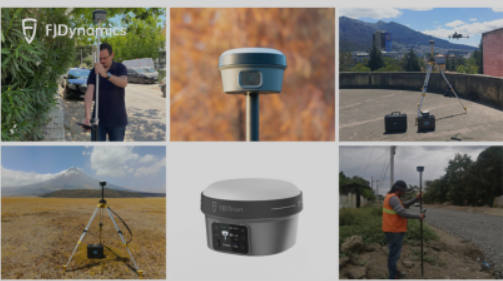
Ever wondered what separates a good GNSS receiver from its peers in outdoor projects? In a market crowded with options, the FJD Trion™ V10i isn’t just another device—it’s the secret weapon trusted by surveyors, constructors, and field professionals who re
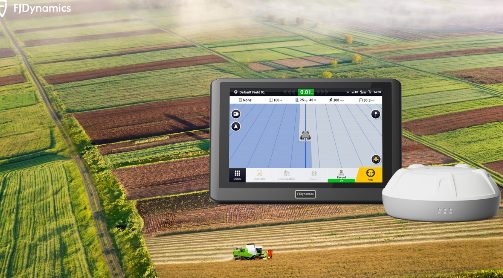
Testing Case Collection of the FJD AS2 Austosteering System in Various Steer-Ready Tractors
The FJD AS2 Steer Ready Autosteering System is a highly versatile autosteering solution that is compatible with both Non-CANBUS and CANBUS tractors. It has recently undergone extensive testing on various tractor models in different countries. The
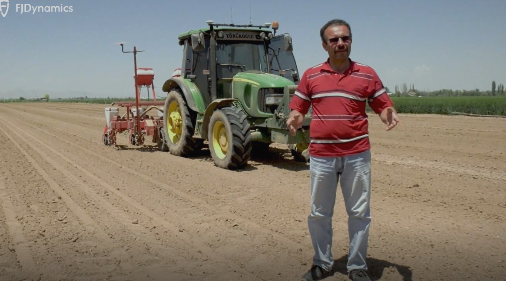
How a Turkish Farmer Transformed His Planting Business with FJD’s Navigation System
In Okçu Neighborhood, Çumra, Konya, Türkiye, Oktay Baş carefully balances the planting schedule for vast arable farmlands. Trusted by farmers in his region, this 50-year-old farming contractor and his team have been the go-to crew for planting crops like sugar beets, maize, beans,
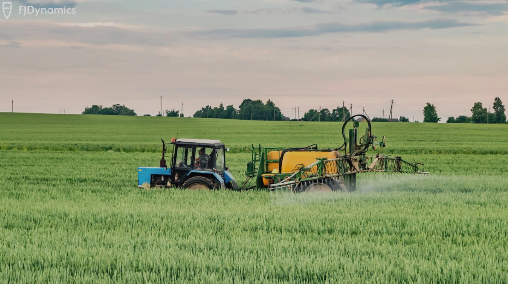
Adaptation Success Stories: How FJD Navigation Systems Are Retrofitted with Precision Spraying
In the evolving landscape of modern agriculture, precision spraying has emerged as a game-changer. Farmers are increasingly turning to retrofitting—upgrading existing machinery with advanced guidance and control systems—to boost efficiency, reduce waste, and cut costs. FJDynamics offers versatile solutions that breathe new life into tractors and sprayers. In this blog,
Adaptation Success Stories: How FJD Navigation Systems Are Retrofitted with Precision Spraying
In the evolving landscape of modern agriculture, precision spraying has emerged as a game-changer. Farmers are increasingly turning to retrofitting—upgrading existing machinery with advanced guidance and control systems—to boost efficiency, reduce waste,

From Paper to Digital: How FJDynamics Revolutionized Building Measurement Processes in Türkiye
In the evolving landscape of modern agriculture, precision spraying has emerged as a game-changer. Farmers are increasingly turning to retrofitting—upgrading existing machinery with advanced guidance and control systems—to boost efficiency, reduce waste, and cu
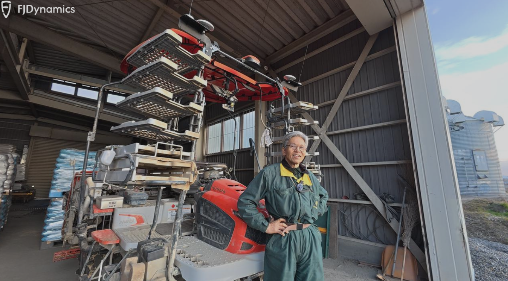
FJD Autosteering Tech: Revolutionizing Organic Rice Farming in Japan
FJD Autosteering Tech: Revolutionizing Organic Rice Farming in Japan In the quiet countryside of Yasu City, Shiga Prefecture, Yukiyoshi Nakamichi cultivates around 40 hectares of paddy rice fields with a firm philosophy: “Machines handle hard work and humans take care of crops”. And this is the motivation that drives him to adopt smart farming tech early on. Nakamichi grows rice using a mix of organic fields (25ha), natural growth areas (8ha), and minimal pesticides. He believes this balanced approach improves his farm’s health and productivity. For over 20 years, this organic farming pioneer has combined traditional natural methods with modern tools—most notably, the FJD AT1 Autosteering Kit. He purchased this system from Tajima Beikoku, FJD’s distributor in his region. “I received a catalog of FJD productions from Mr. Kuroda (the salesperson of the Tajima Beikoku company). I’d seen Chinese-made GPS guidance systems at trade shows 10 years ago and knew Europe had been using them too, so I thought, China is doing it now as well,” said Nakamichi. He introduced the AT1 about five years ago and has used it for farming since then. Keeping Precise Paths in Deep Water Fields In Japan, paddy fields occupy much of the countryside, whether on the alluvial plains, the terraced slopes, or the swampland and coastal bays. So precise planting in rice fields always poses a challenge for local farmers. By installing the AT1 on both rice transplanter and tractor, Nakamichi has used this precision navigation system for about 20 years. For him, “keeping tractor and transplanter moving in straight lines” is especially critical in organic farming. For organic farming, weed control is a constant work. During cultivation, many farmers broadly till the soil to mix in as many weeds and seeds as possible. Nakamichi, for example, tills rows about 60cm wide. He also uses a “thick mud layer” trick: pumping water deep into the soil to create a sediment barrier that stops weeds from sprouting. But getting this right is tricky—too much water creates a dense, muddy mess that smothers weeds, but going too deep makes the water too cloudy to see through, slowing down planting and maintenance work. “Our largest paddy field spans two hectares. At times, I’d have no idea where my tractor was—the field looked like Lake Biwa (Japan’s largest freshwater lake, located entirely within Shiga Prefecture), and I couldn’t tell if I was near the shores of Hikone or Ōtsu”, Nakamichi explained with laughs. However, this challenge was solved after installing the FJD AT1 autosteering system on his farming machinery. “With FJD, I can adjust overlap widths and no longer stress about steering. The difference in fatigue is very big. During peak seasons, this ease of use pays for itself,” said Nakamichi. With the AT1 for precision farming, Nakamichi even shifted his puddling schedule to mornings. To create the ideal “thick mud layer”, he had to do this in calm, windless conditions. But with the FJD auto-steer system, he can work even half-asleep. “There’s no going back to manual operation now,” he said excitedly, showing his satisfaction with the system. Planting Straight Even When Guidance Lines Disappear Like during tillage, Nakamichi faces challenges in planting rice straight in flooded paddy fields. The water, necessary for suppressing weeds, obscures the center-line markers, making precise planting difficult. Incorrect row alignment leads to seedling damage during subsequent weeding, which uses a machine with wheels that could run over misaligned plants. Previously, Nakamichi relied on a highly skilled worker to handle this task. He also explored using a Japanese-made auto-steering system but found it inflexible. “We couldn’t adjust the settings too much. The system left 30cm from the row during turnaround, but we wanted to leave an additional 3cm for our weeder to get in. We suggested this, but the person in charge flatly said it was impossible to do so.” After learning about the FJD’s agriculture navigation system, Nakamichi decided to purchase an AT1 system. Its superior adjustability, allowing for 1cm increments in overlap width, greatly improved planting accuracy and simplified subsequent weeding. This addressed the core issue of maintaining precise row spacing, crucial for preventing seedling damage during the weeding process. As for the cost-effectiveness of the AT1 compared with GPS-equipped rice transplanters, Nakamichi indicated it was a more financially viable solution, especially considering the practical advantages of improved precision, efficiency, and cost-effectiveness in rice cultivation. “I think, even if you use a rice transplanter for a long time, let’s say, 600-800 hours (for one-month planting cycle). If you add the GPS option when you buy a new rice transplanter, the price will increase by about 2 million Yen (about 13000+ USD), explained Nakamichi. “From this point of view, FJD’s system is very cost-effective because it can be taken down and installed on the rice transplanter. We now have three operators, and anyone can operate it.” Good for the Environment: Greener Farming with FJD Ag Tech Yukiyoshi Nakamichi’s story isn’t just about rice planting—it’s a manifesto for sustainable agriculture. By combining tradition with modern innovation, he’s proven that smart tech isn’t a threat to organic ideals; it’s their greatest ally in farming production and environment protection. “The other day, I filmed our worksite with a drone and accidentally captured an aerial view of Lake Biwa—murky water stretched far into the lake. There’ve long been rumors about environmental issues around Lake Biwa, but seeing it firsthand was different. With auto-steer, we can work without draining water. Thinking about it, I realize this really matters.” High-precision farming tech like the FJD AT1 autosteering system boosts efficiency and protects the environment. By delegating machine-friendly tasks to technology, Nakamichi now focuses on what only humans can do: “communicating with crops” and growth observation. His smart farming approach reveals the untapped potential of organic planting for future agriculture. in User Case # FJD AT1 Autosteering Kit Precision Agriculture
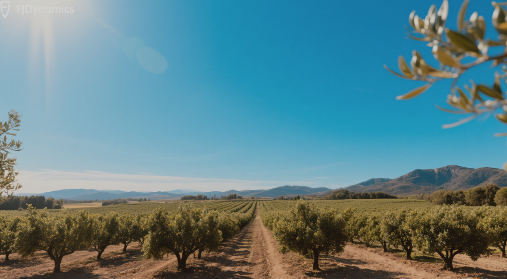
Precision Spraying Changes Orchard Management: A Case Study From Spain
In the sun-drenched orchards of Spain, where rows of fruit plants grow lushly under the Mediterranean sun, a quiet revolution is taking place. For years, orchard managers have battled the same challenges: uneven pest outbreaks, rising pesticide costs, environmental concerns, and the physical toll of manual labor.
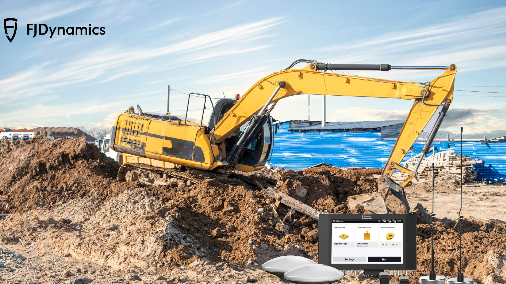
FJD G31 Lite in Construction Sites: Why It’s the Smart Choice for Contractors in South Korea
The construction industry is evolving rapidly, with contractors worldwide seeking technologies that balance cost, efficiency, and simplicity. Among those smart construction systems, the FJD Easydig G31 Lite 3D Excavator Guidance System stands out with cost-effective performance and user-friendly design. It is a lightweight 3D excavator guidance system designed to meet real-world d
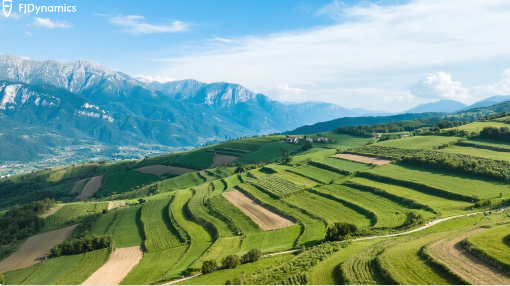
Potato Planting in Italy: How a 50-Year-Old Tractor Gets Autosteering Upgrade With FJDynamics
In the rugged hilly areas of Italy’s Abruzzo region, a 1974 Fiat 640 tractor hums to life. But this isn’t a story about nostalgia—it’s a transition to modern innovation for smart farming. Thanks to FJD’s AT1 autosteering system, this 5-decade-old vehicle is now planting potatoes with pinpoint accuracy, blending old-school durability with cutting-edge tec